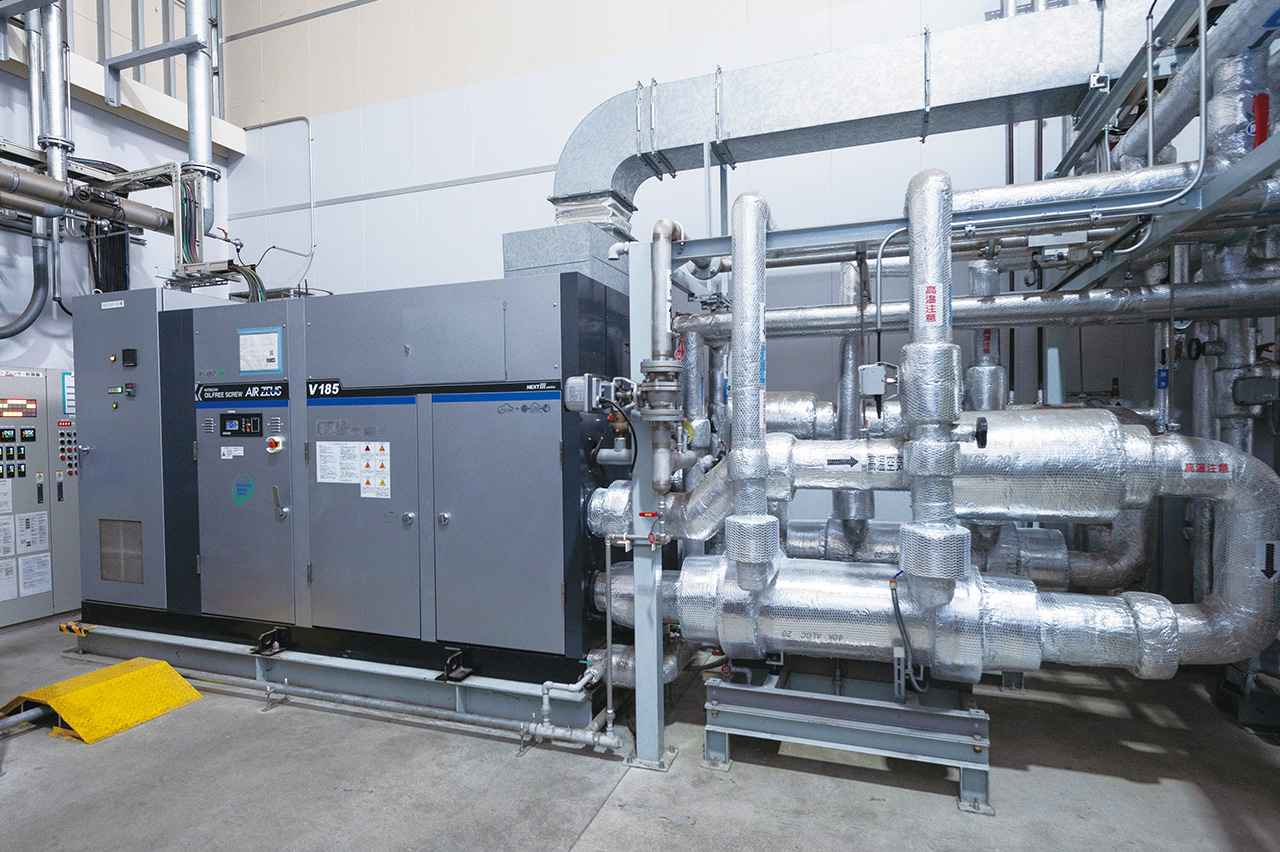
For decades, manufacturing has generated a form of energy that is often simply discarded.
When air compressors produce compressed air, most of the input energy is released as heat. The same is true for paint lines, welding processes, and other production-support systems. As long as a factory is operating, these systems continuously emit heat. In effect, waste heat never stops.
The question, then, is how we define it. Is it a loss—or an unrecovered asset?
From “Saving” to “Circulating”: A Shift in Perspective
Traditionally, energy efficiency in factories has focused on reducing consumption. LED lighting, higher-efficiency HVAC systems, and optimized operating hours have all played an important role.
Today, however, the conversation is changing. As carbon neutrality targets become more specific and Scope 1 and Scope 2 emissions are treated as management priorities, the focus is shifting.
The question is no longer only how much energy can be saved, but how much can be circulated.
Rather than focusing solely on reducing demand, the emerging challenge is how to utilizethe energy already being produced inside the factory. This shift in perspective is becoming central to next-generation infrastructure design.
Machines That Produce Air Also Generate Heat
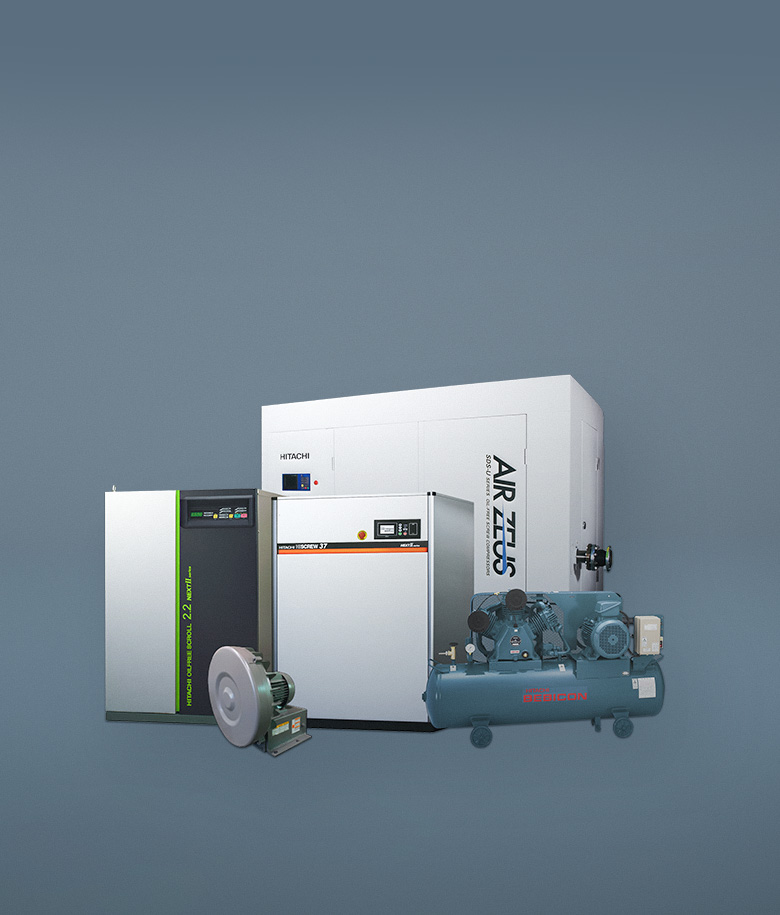
Air compressors are among the most critical utility systems in manufacturing. In large-scale facilities, multiple compressors often operate continuously,around the clock.
When the energy balance of compressors is examined, a clear reality emerges. Only about 10–20 percent of the electricity consumed is delivered as usable compressed air at the point of use. The remaining 80–90 percent is converted into heat and, in many cases, released directly into the atmosphere (based on U.S. Department of Energy–related sources).
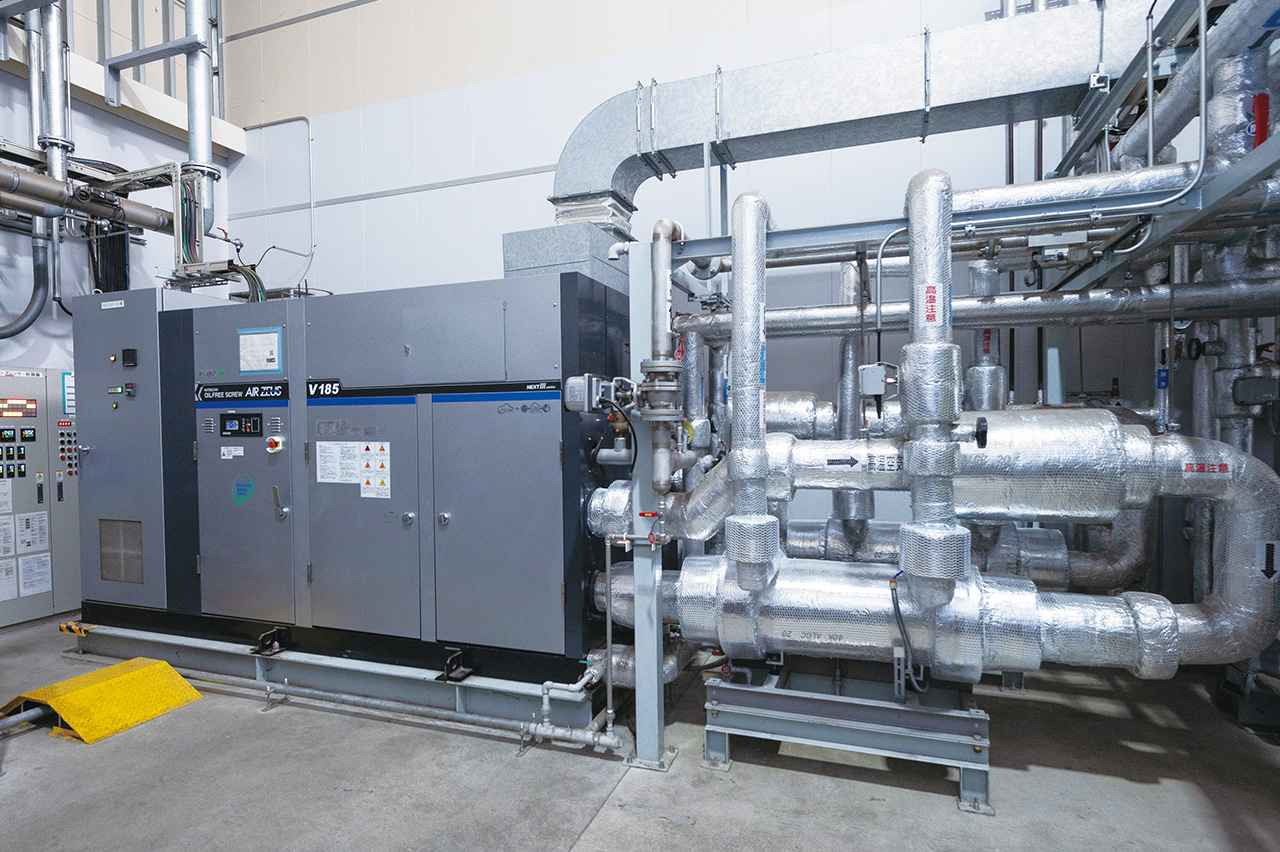
This is not an unavoidable loss. From a technical standpoint, this heat can be recovered and reused as hot water.
Applications such as cleaning processes, space heating in winter, and hot water supply already exist in many factories. In many cases, the demand for heat already exists. If the energy is already being generated, it can be put to use.
Designing Circulation from the Start
One reason waste heat recovery has not been widely adopted is the difficulty of retrofitting existing facilities.
Integration with existing piping systems, long distances to heat demand points, and system-control complexity have all been practical barriers.
This changes, however, at the stage of new construction or plant expansion.
By incorporating heat recovery into infrastructure design from the outset, piping layouts and system integration can be planned far more efficiently.
What matters is seeing heat recovery not as an additionalenergy-saving measure, but as a design philosophy. Instead of discarding energy after use, it is circulated within the factory.
Whether this perspective is embedded at the design stage can have a significant impact on long-term environmental performance.
What “Over 90% Recovery” Really Means
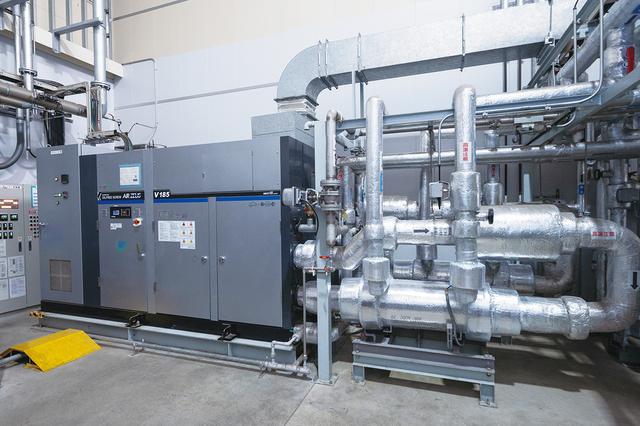
Recovering more than 90 percent of the heat generated by air compressors and reusing it as hot water is not a theoretical concept. It has already been achieved in practice.
At a large-scale truck manufacturing plant, Hitachi Industrial Equipment Systems’ heat recovery solution (SDS) has delivered this level of performance.
The importance of this figure goes beyond incremental energy savings. It challenges the assumption that waste heat is inherently a loss.
If energy that was once discarded can be recovered and reused, it was never truly lost. It was simply left unused.
Re-evaluating Hidden Costs in Factories
As the pressure to achieve carbon neutrality increases, one factor is often overlooked: the energy already being generated inside factories.
Waste heat recovery offers a way to utilizethis existing resource and is increasingly being reconsidered from a return-on-investment perspective.
How much thermal energy doyour facility’s air compressors release into the atmosphere each year? Few manufacturing professionals can answer this question with confidence.Yet that figure may become the starting point for the next phase of environmental investment.
Reframing waste heat as an asset is more than an operational improvement. It representsa shift in how factory infrastructure is designed—and how sustainability itself is defined.
Recognizing waste heat as an asset, rather than a loss, is becoming the new standard in factory infrastructure.
Source
For more information on HIES heat recovery systems (SDS) and air compressor solutions, please visit (Japanese):
* 工場設備の省エネ化見直しでCO2削減「日立エアコンプレッサー」
Learn more about air compressor systems from Hitachi Industrial Equipment Systems.