During Thailand's dry season, watering the trees around the factory becomes essential.
"Without water, the trees simply won't survive."
Pointing to a sprinkler beside the factory grounds, Kodama, Director & Factory Manager of Hitachi Industrial Technology (Thailand) Ltd. (HITT), explained why the trees receive regular watering.
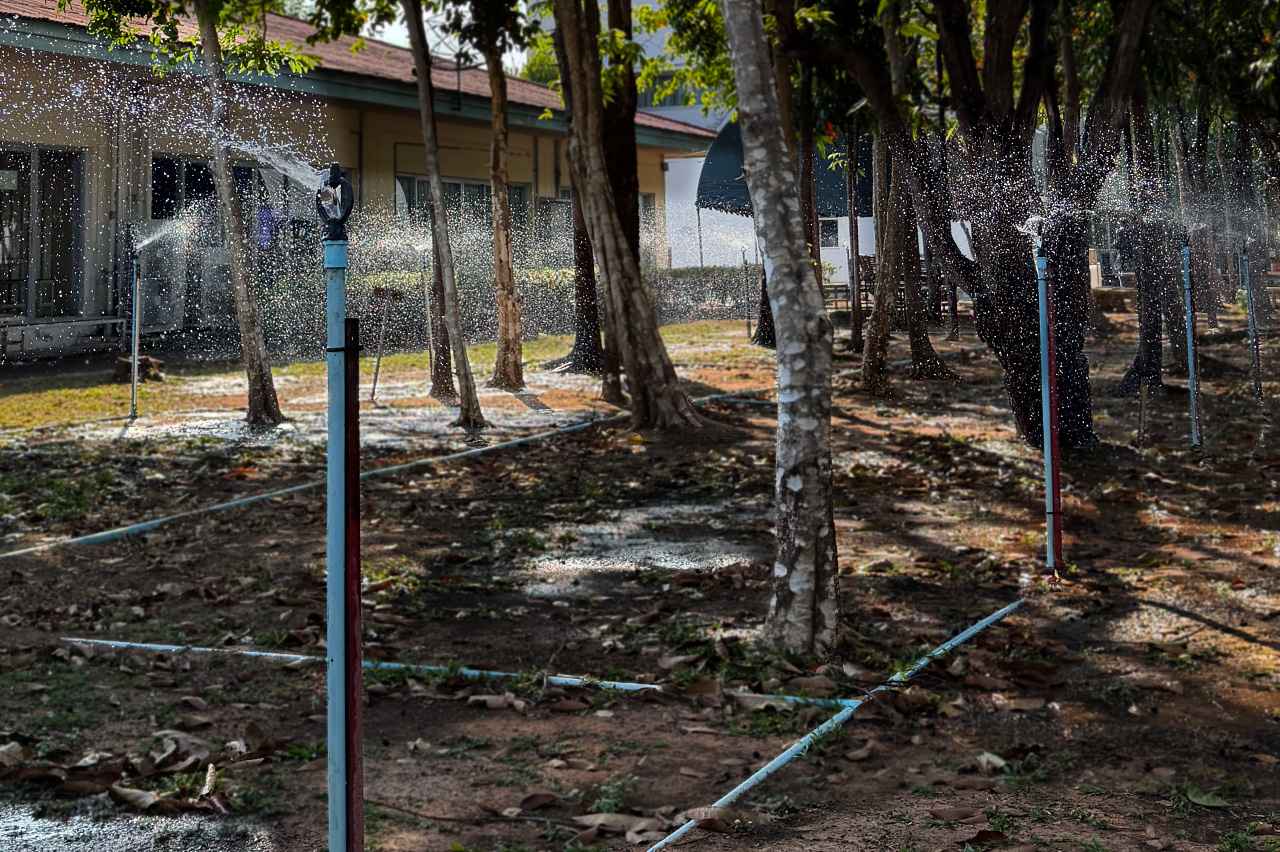
The water flowing from the sprinkler is not freshly supplied water. It is treated and reused water—water that has already been used in the factory, treated through a dedicated process, and put back into use.
At first glance, this may seem like a small initiative at a single manufacturing site. Yet behind it lies a challenge of global significance.
In a report released alongside the 2023 UN Water Conference, the Global Commission on the Economics of Water (GCEW) warned that, without significant action, global freshwater demand could exceed available supply by 40% by 2030. The report highlights a reality that manufacturers can no longer ignore: water is no longer an unlimited resource.
While decarbonization has become a common language for businesses worldwide, water has received far less attention. Johan Rockström, Co-Chair of the GCEW and Director of the Potsdam Institute for Climate Impact Research, has argued that water underpins virtually every global challenge, yet has rarely been treated as a central issue.
For manufacturers, treating used water and putting it back into use is one practical way to address this challenge. At HITT, a project to reduce freshwater consumption and expand the use of reused water began in 2019.
Treating and reusing water is not new. The real challenge lies elsewhere: how do you continue finding new ways to use that water?
Keeping Water in Circulation
Watering the trees is only one of many ways reused water is put to work at HITT. To understand the significance of the initiative, it helps to follow the water's journey through the factory.
The effort began in 2018, when HITT established a Facilities Department dedicated to improving the management and efficiency of factory resources, including water, electricity, LPG, thermal energy, and CO₂ emissions.
The following year, the department launched a project to reduce the factory's reliance on freshwater supplied from the Kabinburi Industrial Zone while expanding the use of reused water throughout the site.
The first step was not to install new equipment on the production line. Instead, the team focused on building the foundation for water reuse by expanding storage capacity for treated water, creating a stable supply that could support wider applications across the factory.
But infrastructure alone does not create a circular water system.
The real question was: Where could reused water be used next?
That question became the driving force behind the project—and marked the beginning of HITT's effort to expand the role of reused water throughout its operations.
Expanding the Uses of Reused Water
HITT did not attempt to replace freshwater everywhere at once.
Instead, the factory expanded the uses of reused water step by step.
The first application was irrigation for lawns and trees. From there, reused water was introduced for equipment cleaning, cooling fans, toilet flushing, and eventually the wet scrubbers used on the motor painting lines.
Each new application reduced the factory's dependence on freshwater while demonstrating that treated water could be safely and effectively used in a wider range of operations.
Among these applications, the wet scrubbers and toilets have delivered the greatest reductions in freshwater consumption.
In 2024, reused water was introduced to the wet scrubbers on all seven motor painting lines, reducing freshwater consumption by approximately 140 cubic meters per month. The expansion of reused water to toilets across the factory has reduced a further 500 cubic meters per month.
Together, these two applications have reduced freshwater use by approximately 640 cubic meters per month. Including earlier applications such as irrigation and equipment cleaning, the total reduction is even greater.
The sprinklers that water the factory's trees—the same sprinklers Kodama pointed to at the beginning of this story—are part of that journey.
Their contribution to water savings may be relatively small, but they represent something larger. They show how reused water has gradually expanded beyond production equipment to support the entire factory environment.
Ultimately, the project's success is measured not only by how much water is saved, but by how many new uses for reused water can be found.
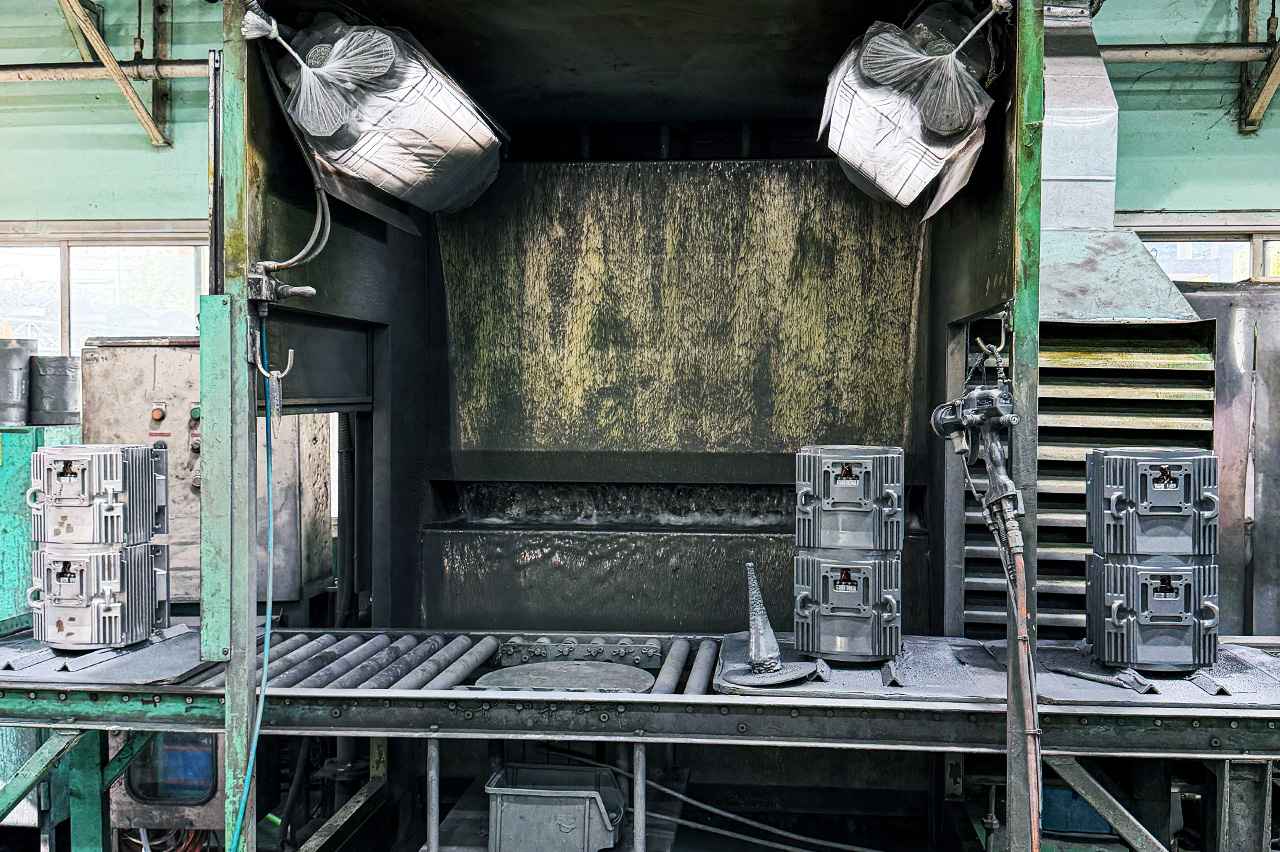
Wet scrubber installed on a motor painting line. The system captures paint mist and dust generated during the painting process using water. At HITT, the water used to operate the system has been switched from freshwater to reused water.
The People Behind the Water
Reused water does not simply appear on its own.
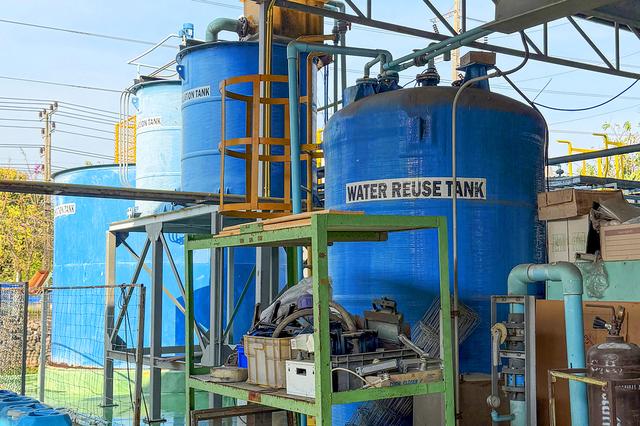
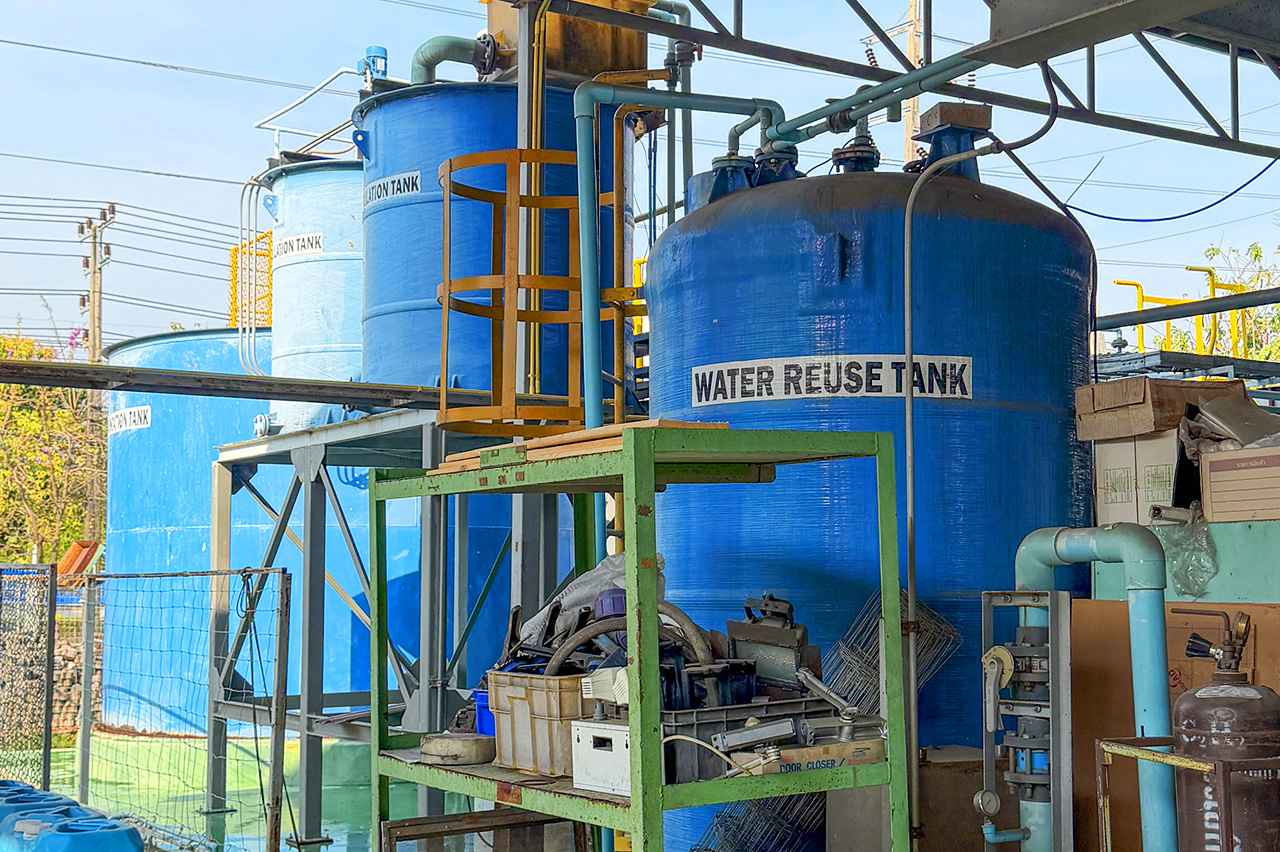
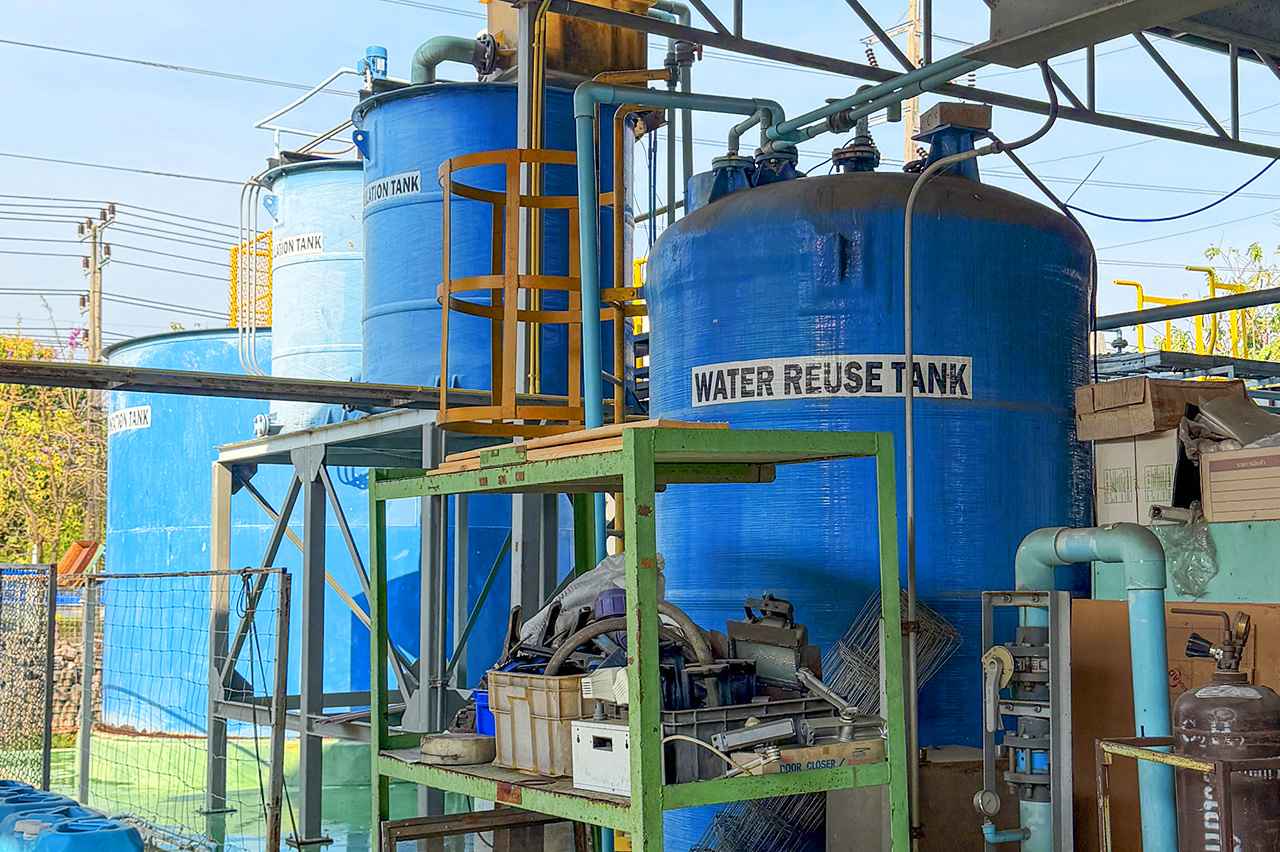
In one corner of the factory stands a storage tank for treated water. Beside it is a process chart outlining each step required to make used water suitable for reuse.
"We follow this procedure every day—preparing treatment chemicals, replacing filters, and checking water quality," explains Seradech Kampeeranon, Deputy Section Manager, Technology & Service Facility Department, who has led the project from the beginning.
Water used in the factory goes through multiple treatment stages. Chemicals are used to remove impurities, adjust the water's acidity, and disinfect the water before it is returned to service.
But the process does not end with the equipment.
Maintaining a reliable supply of reused water depends on people. Monitoring water quality, adjusting treatment conditions, and replacing filters are all part of the daily work that keeps reused water safe and available for an expanding range of applications across the factory.
Their work quietly supports a factory that never stops.
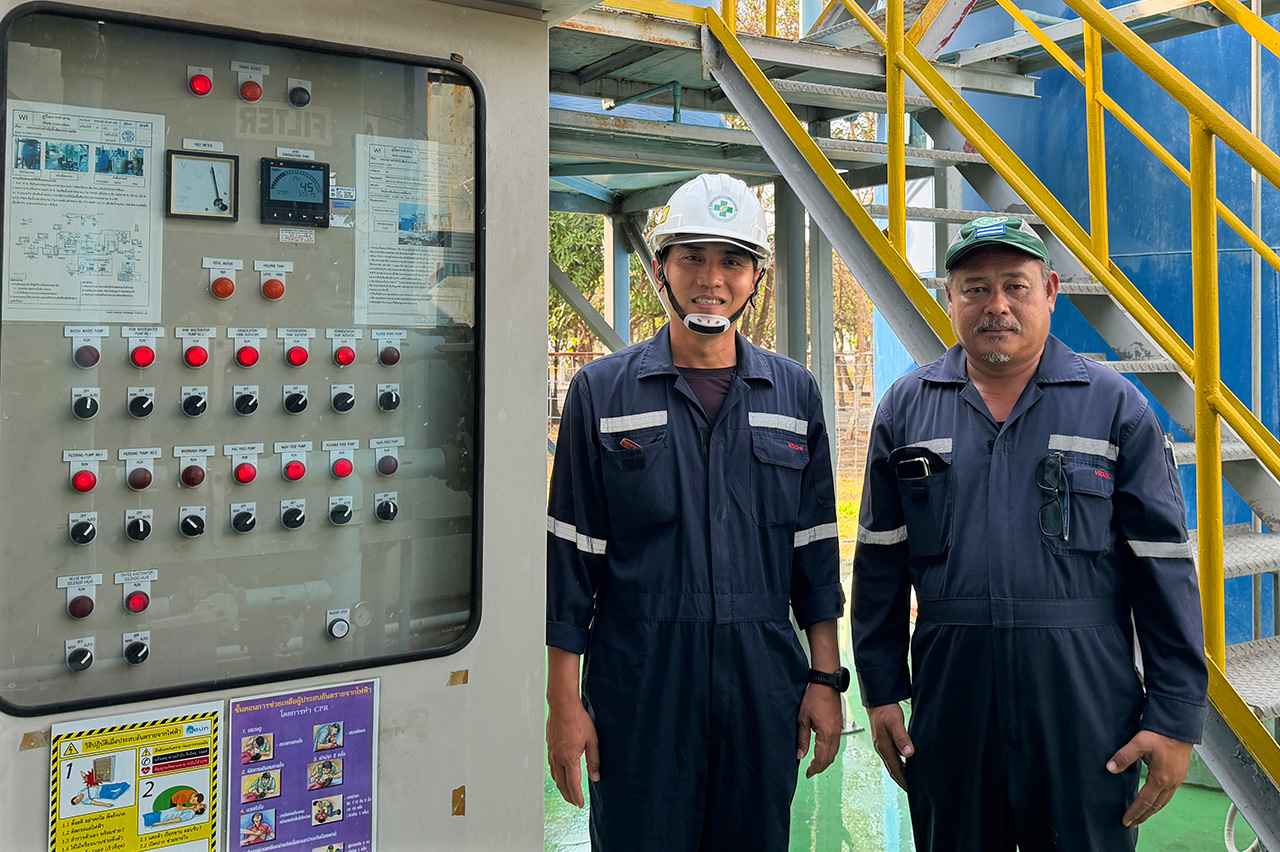
In front of the Water Reuse Tank. Seradech Kampeeranon (left) and Prayoth Buaphuen (right), who have led HITT's water reuse initiative.
Rethinking Water Resources
As global water stress becomes more pressing, the efficient use of water is becoming a shared challenge for manufacturing sites around the world.
Hitachi Group identifies water resource conservation as an important theme under its long-term environmental targets, Hitachi Environmental Innovation 2050, and has set a target of reducing water use intensity—water consumption per unit of activity, such as production output or revenue—by 10% by fiscal 2030 compared to fiscal 2019.
At HITT, the reused water initiative translates that direction into daily operations. By establishing a department to manage the use of water, electricity, and other factory resources, and by systematically reducing freshwater consumption, the factory has turned a global sustainability challenge into a practical, site-level effort.
The project did not begin because the factory was facing an immediate water shortage. Instead, it began as a way to prepare for future change.
As pressure on global water resources continues to increase, addressing water before a crisis occurs can help strengthen the resilience of manufacturing operations.
Even as decarbonization remains a central focus for industry, water is another resource that manufacturers must learn to manage more carefully.
At HITT, that question is already being answered step by step.
How Far Can Reused Water Go?
Nearly seven years have passed since HITT launched its reused water project in 2019.
What began with irrigating lawns and trees has gradually expanded to equipment cleaning, toilet flushing, and the wet scrubbers used on the factory's motor painting lines. Looking back, the project is not simply a story of reducing freshwater consumption—it is a story of continually finding new uses for reused water.
And that journey is far from over.
"Our goal is to increase the proportion of reused water to around 20% of the factory's total water consumption," says Kodama.
For HITT, the figure represents more than a numerical target. It points to a direction of continuous improvement.
The question is no longer whether reused water can be used again. It is where it can be used next.
Each new application reduces dependence on freshwater while making manufacturing operations more resilient.
The sprinkler watering the trees during Thailand's dry season is just one small part of that story.
It also serves as a reminder that sustainability is often built not through a single breakthrough, but through the steady expansion of practical ideas—one application at a time.
Reference:
Learn more about environment from Hitachi Industrial Equipment Systems.

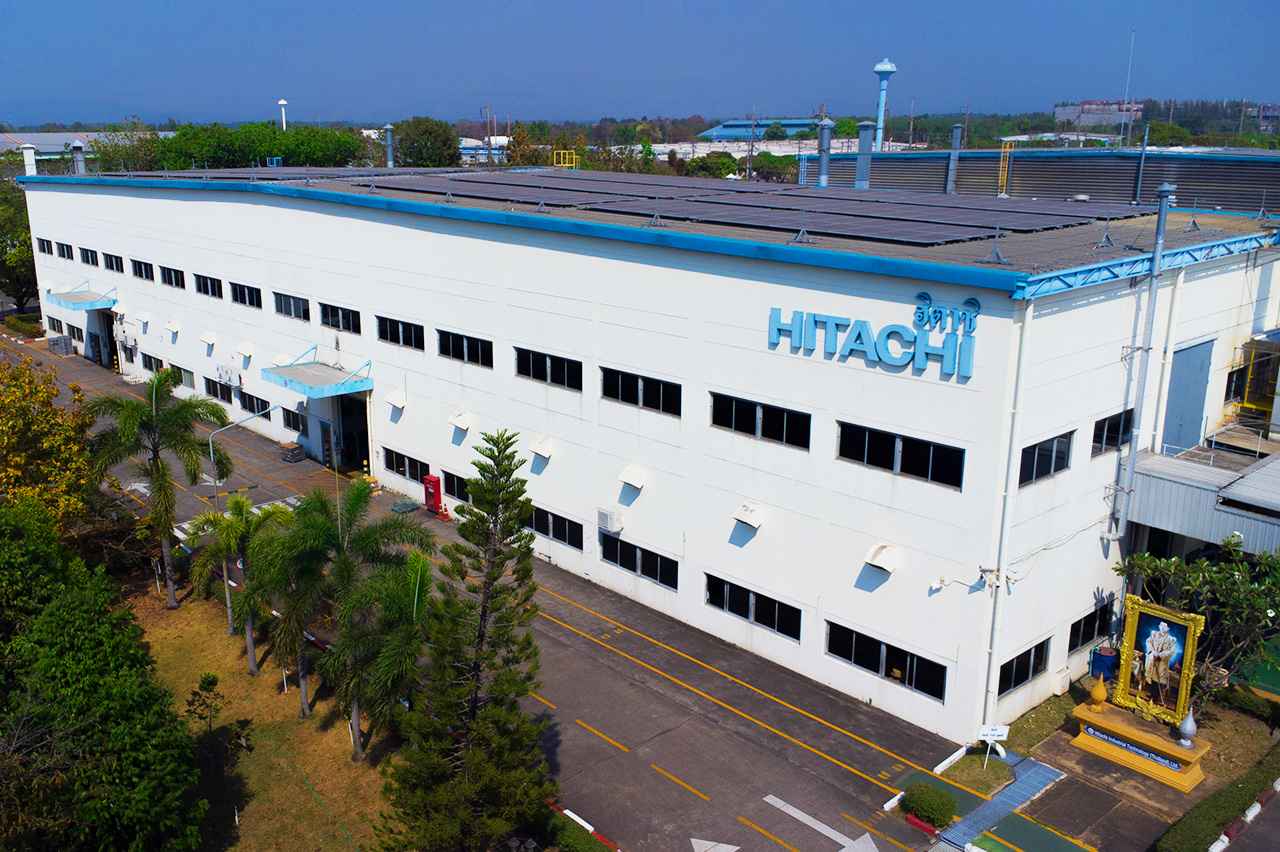
About Hitachi Industrial Technology (Thailand) Ltd.
Hitachi Industrial Technology (Thailand) Ltd. (HITT) is a manufacturing company within the Hitachi Industrial Equipment Systems Group, established in 1989. Since 1996, the company has operated its production facility in Kabinburi, Prachinburi Province, manufacturing industrial products including motors, vortex blowers, molded case circuit breakers, and magnetic contactors.
In addition to supplying products to customers in Thailand and overseas, HITT continues to improve the efficient use of resources, including water and energy, across its manufacturing operations.