When corporate sustainability commitments are announced publicly, they often appear as targets: carbon neutrality by 2030, zero landfill waste by 2030, nature-positive goals for the future. These ambitions matter. But targets alone do not transform landscapes, extend product lifecycles, or rebuild ecological systems.
Between declaration and outcome lies something slower, less visible, and far more difficult to measure: the long-term work of building relationships, restoring ecosystems, and remaining committed even when results are not yet fully visible.
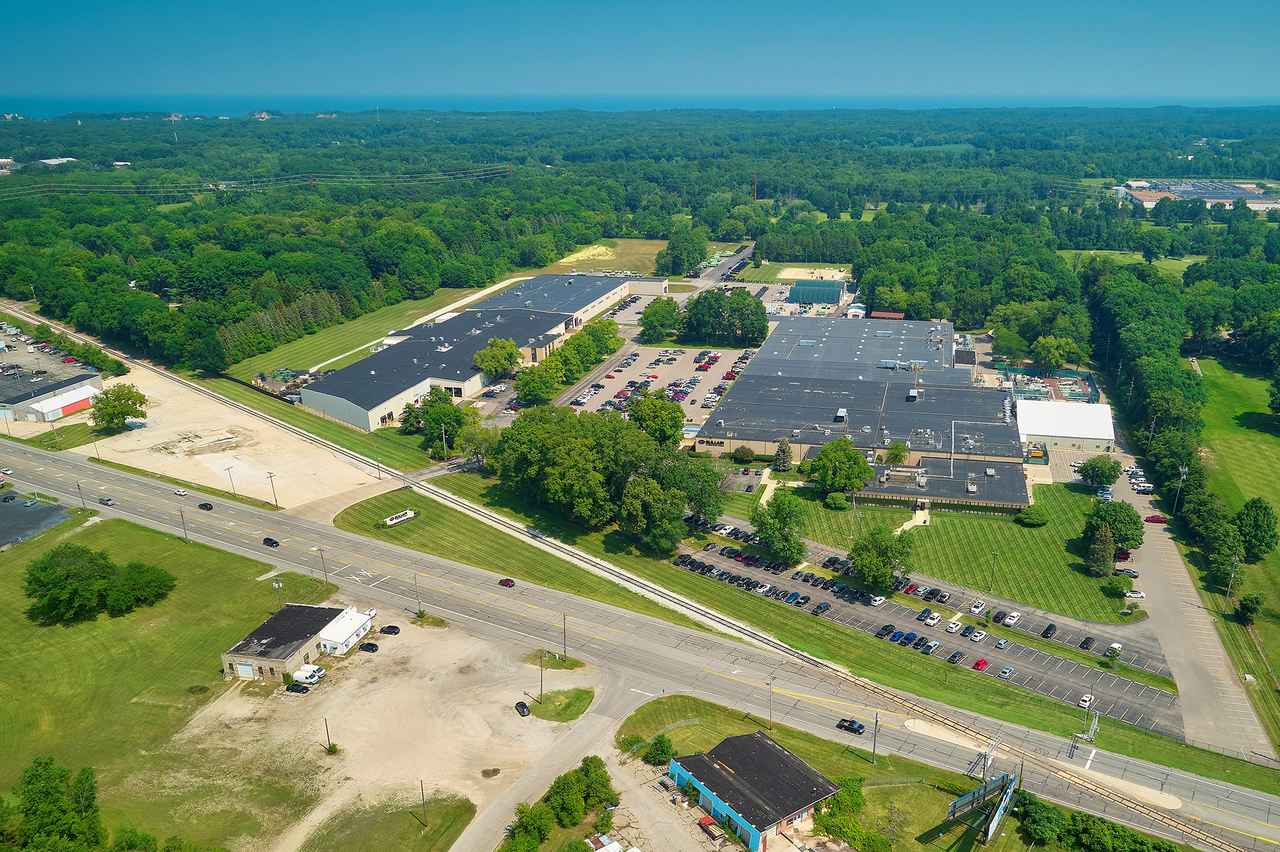
At Hitachi Global Air Power, headquartered in Michigan City, Indiana, sustainability is taking shape through a series of initiatives that are still evolving. Some changes remain largely invisible beneath the surface. Others may take years before their full environmental impact can be understood. Yet together, they offer a rare glimpse into what sustainability implementation looks like in practice—not as a finished success story, but as ongoing work grounded in trust, stewardship, and continuity.
Starting with the Ground Beneath Your Feet
In April 2025, Hitachi Global Air Power announced an unusual decision for an industrial manufacturer: it would stop mowing a lotof its grass.
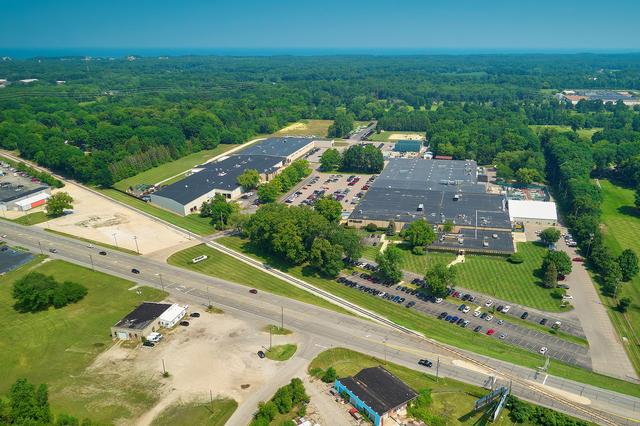
Over the course of a five-year project, nearly sevenacres of conventional turf grass at the company’s Michigan City headquarters campus are being converted into native prairie habitat. In the first year alone, approximately 85 percent of the turf area was transitioned.
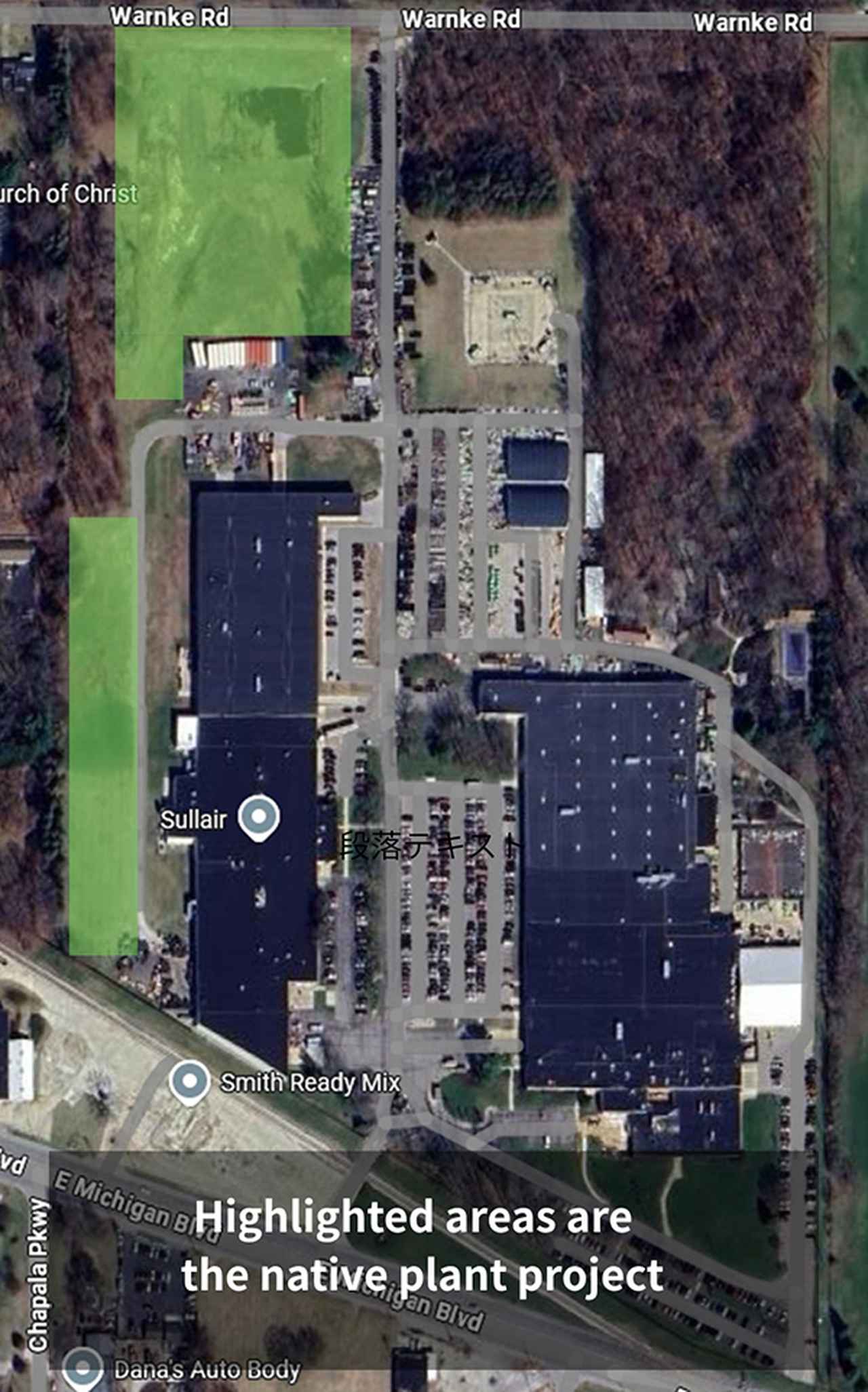
The environmental logic behind the project extends well beyond appearance. Eliminating turf maintenance in restored areas is expected to reduce associated emissions by approximately 94 percent while removing the need for irrigation in those zones entirely. Native prairie species also develop extensive root systems that improve water absorption and create habitat for pollinators and other native species—functions conventional turf grass cannot provide.
This project was made possible through a strong partnership with the LaPorte County Soil and Water Conservation District, which provided technical expertise, invasive species management support, and grant funding through the Clean Water Indiana program.
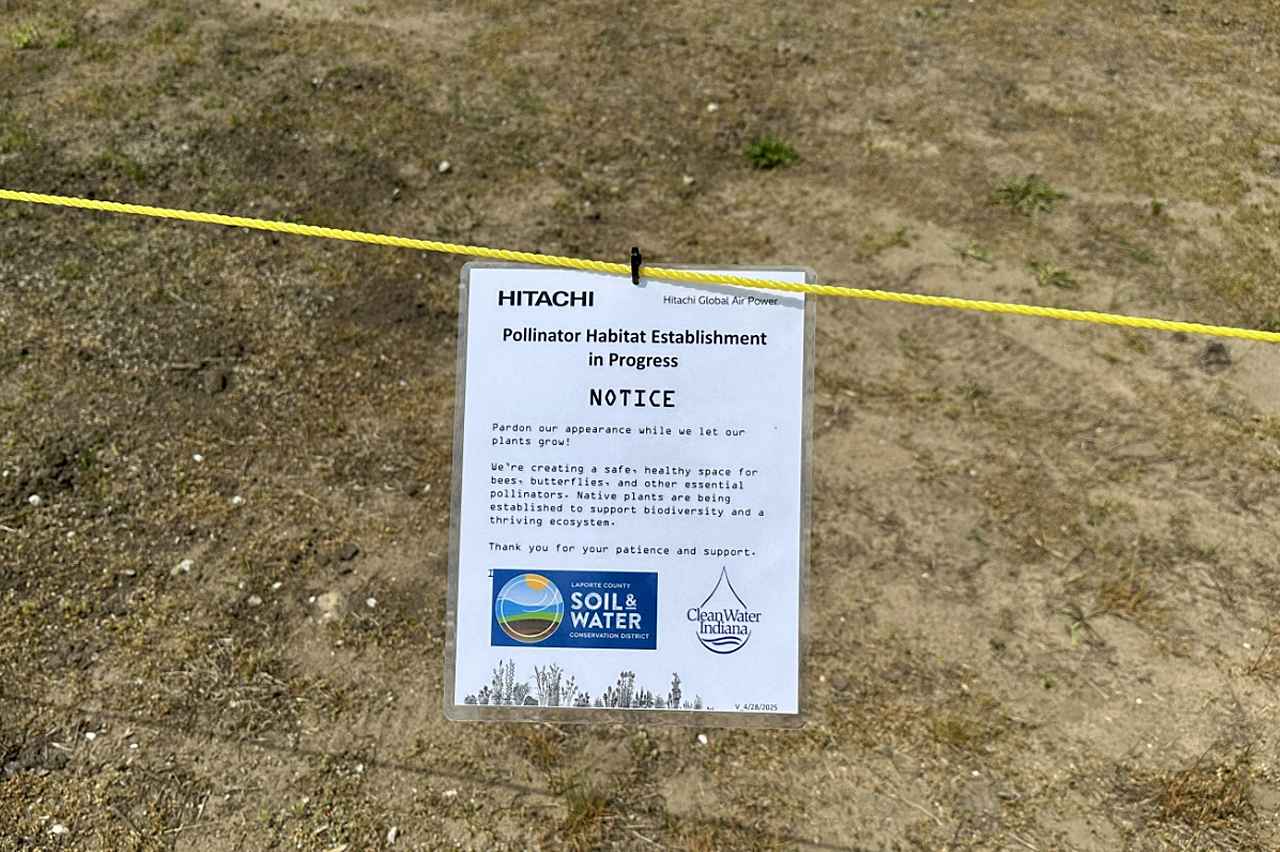
Roped-off areas at Michigan City Headquarters with signage in place following effective turf termination, marking a key step in prairie establishment.
Also, it supports all three of Hitachi Global Air Power’s core environmental priorities: decarbonization, resource efficiency, and what Hitachi now describesas “Nature Positive."
In 2025, the existing turf was terminated, and just before the first snowfall, native prairie seeds were planted using a method known as winter sowing. This approach allows seeds to undergo cold stratification and supports their natural germination cycle.
The prairie is currently in what restoration practitioners refer to as the “sleep, creep, leap” phase of establishment. At this early stage, most progress occurs below ground, with root systems developing, native species gradually establishing, and ecological balances beginning to shift. These processes may take several years to become fully visible above the surface.
Throughout the growing season, restoration teams return repeatedly to the site—not to judge whether the prairie already looks complete, but to observeslower signs of establishment that may only become meaningful over time.
Monitoring is handled by the LaPorte County Soil and Water Conservation District through scheduled site visits between late spring and mid-November, timed to planting activities and adaptive management windows. The signals being tracked are appropriate to each phase of establishment rather than short-term appearance.
In 2026, the project advances into a new phase: an Oak Savanna restoration effort focused on long-term ecological resilience. Twenty-five container-grown oak trees were planted to reestablish canopy structure, followed by planting plugs to improve biodiversity and soil health. Adaptive management will continue through mid-November, including a fall mow-down to support sustained establishment.
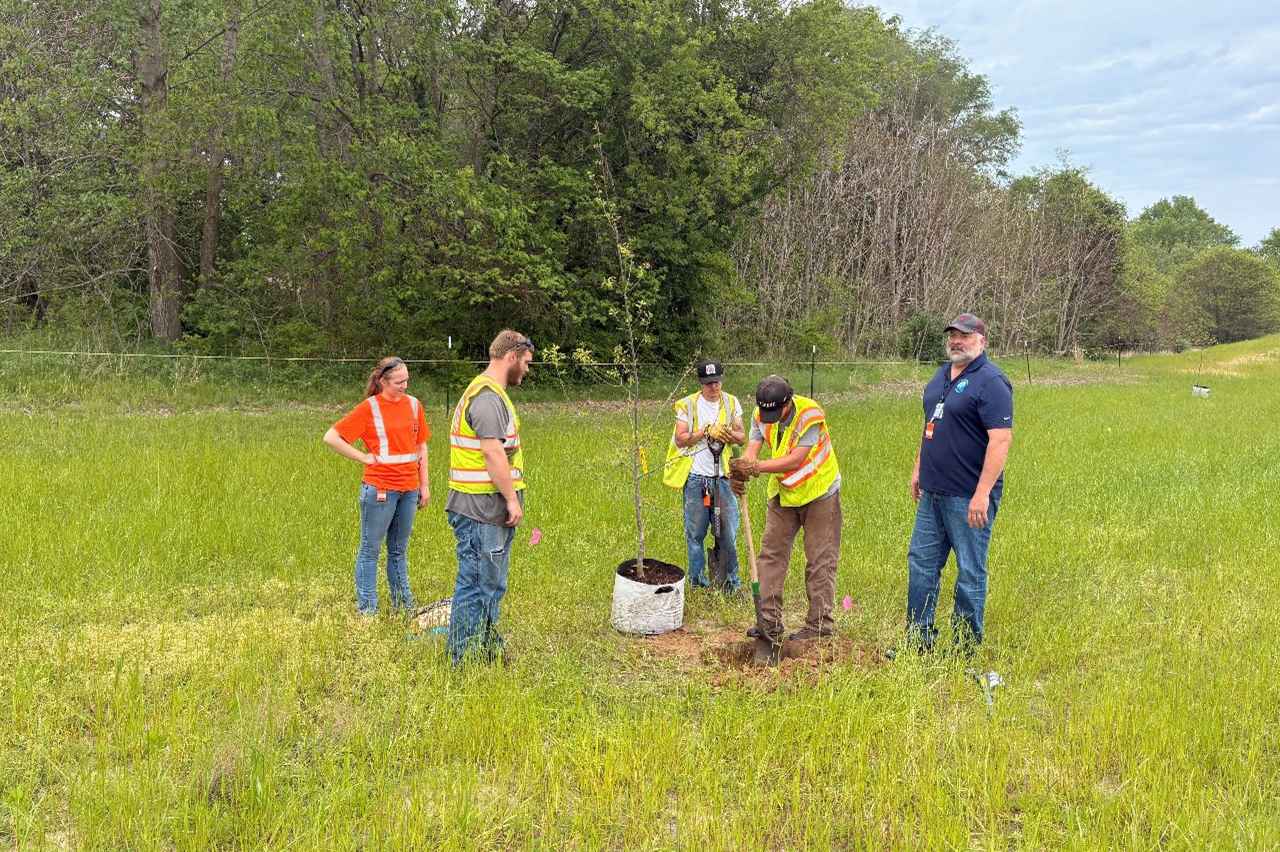
Paul Vicari (right), MS4 Director and CountyConservationist with the LaPorte County Soil and Water Conservation District,working with the planting crew to establish native oak species, with annual rye performing as intended as a nursery crop to support early growth and site stabilization.
What emerges from the project is not simply a redesigned landscape, but a different understanding of what industrial land can become over time—and a model of ecological stewardship built not on corporate expertise alone, but on the sustained involvement of local conservation partners.
Where Ecology, Culture, and Community Intersect
A second initiative expanded that idea further.
In January 2026, Hitachi Global Air Power announced a five-year woodland restoration project at the International Friendship Botanic Gardens in nearby Pottawattamie Park, Indiana. The initiative focuses on restoring approximately 8.5 acres of oak-dominated woodland within the Lake Michigan coastal ecosystem.
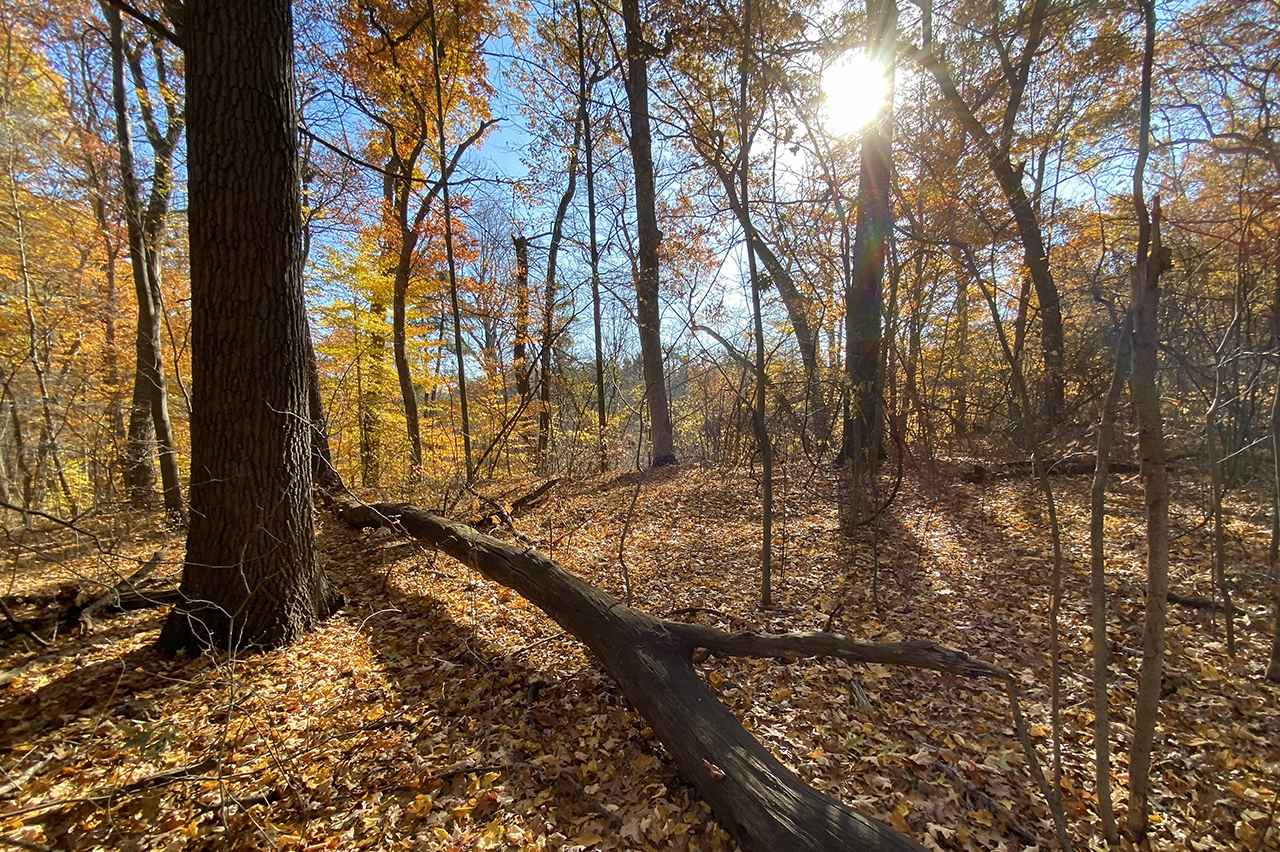
Woodland habitat restoration at Friendship Botanic Gardens through targeted removal of Amur honeysuckle and other invasive species, restoring light availability to previously suppressed areas and supporting native understory growth.
The ecological objectives are practical and specific: remove invasive species such as Garlic Mustard and Amur Honeysuckle, restore light availability to suppressed native plant communities—with an estimated 30 to 40 percent increase in light penetration—and address what ecologists describe as a “missing cohort crisis,” where younger generations of oak trees are failing to regenerate naturally.
But the project also carries another dimension—one shaped through conversations and collaboration beyond the company itself.
The vision of integrating Japanese cultural principles into the woodland restoration was conceptualized by Paul Vicari, MS4 Director and County Conservationist with the LaPorte County Soil and Water Conservation District. From the outset, the intent was to create something authentic and place-appropriate: a restored woodland that would also serve as a Forest Bathing—Shinrin-Yoku—destination, drawing on the Japanese practice of immersive, contemplative connection with forest environments. The project also draws from concepts such as Kyōsei(symbiotic harmony) and Ma (meaningful space).
The idea originated with a county conservationist, reflecting the strength of the partnership. It is a relationship in which each party contributes expertiseand resources the other cannot provide on its own. Hitachi Global Air Power has operatedin Michigan City for more than sixty years through the Sullair business, and its parent company traces its roots to Japan. The Botanic Gardens have served as a cultural bridge within the region for nearly acentury. The convergence of Japanese environmental philosophy and Midwestern ecological restoration is, in this context, less a design choice than a natural expression of overlapping histories.
Community response since the project’s announcement has been strong. The story has been covered by six regional outlets and featured on Indiana 105 (105.5 FM), reflecting interest that extends well beyond the immediate project partners.
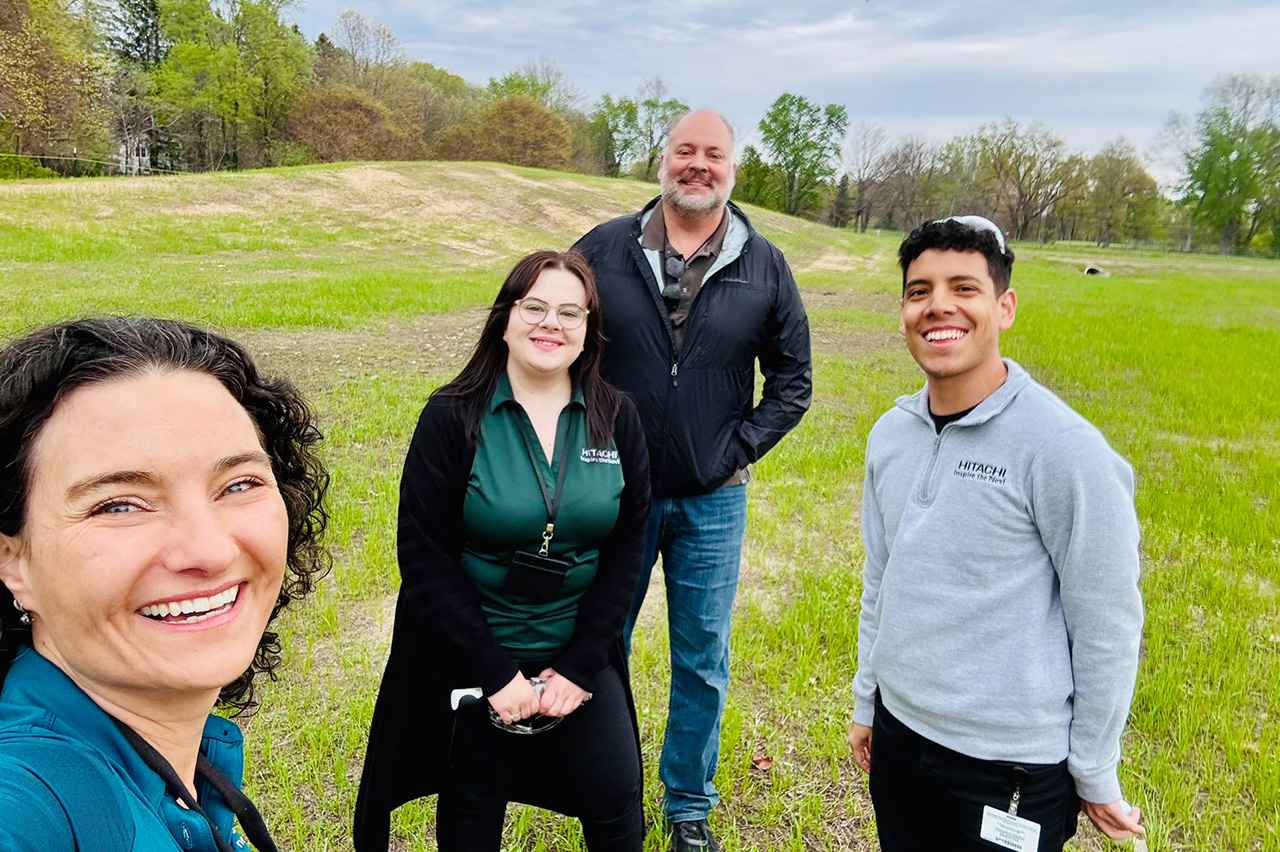
Project stakeholders and team members at the restoration site at the Michigan City headquarters campus, including Paul Vicari (back row), pictured left to right with Katrina Saucier, Velika Golaboski, and Ramiro Aguilar.
Public walking trails and interpretive signage are expected to be in place by summer 2026. The restoration is projected to activate suppressed seed banks of native spring wildflowers—changes that will take time to fully establish, as any woodland recovery does.
When a Product’s Life Does Not End at Sale
The third strand of this story unfolds not in a restored landscape, but inside an industrial remanufacturing facility.
At SRC Industrial Corp, a remanufacturing partner supporting Hitachi Global Air Power, some
portable air compressorcomponents are now entering their fourth lifecycle—rebuilt, returned to operation, and rebuilt again multiple times over.
The term “fourth lifecycle” refers specifically to the number of usable lives a salvaged product has had. The first lifecycle is the product manufactured and sold as new. The second through fourth lifecycles refer to subsequentuses after the product has been returned and remanufactured.
In practice, this applies to major value-retaining structural and mechanical components—including the main frame, air end, brackets, controllers, heat exchangers, and fuel tank—that pass full OEM inspection and testing. Consumable and wear parts such as filters, seals, gaskets, and belts are excluded from the lifecycle count and replaced with new OEM parts at each remanufacturing cycle, ensuring performance, safety, and warranty equivalence.
This is circulareconomy not as abstract principle, but as operational continuity. Compressed air systems supporting industries such as food processing, pharmaceuticals, and manufacturing are themselves being managed for longevity rather than replacement. Extending product lifecycles in this way reduces demand for new raw materials and decreases waste generation—whilethe requirement that components pass full OEM inspection at each cycle ensures that longevity does not come at the cost of performance.
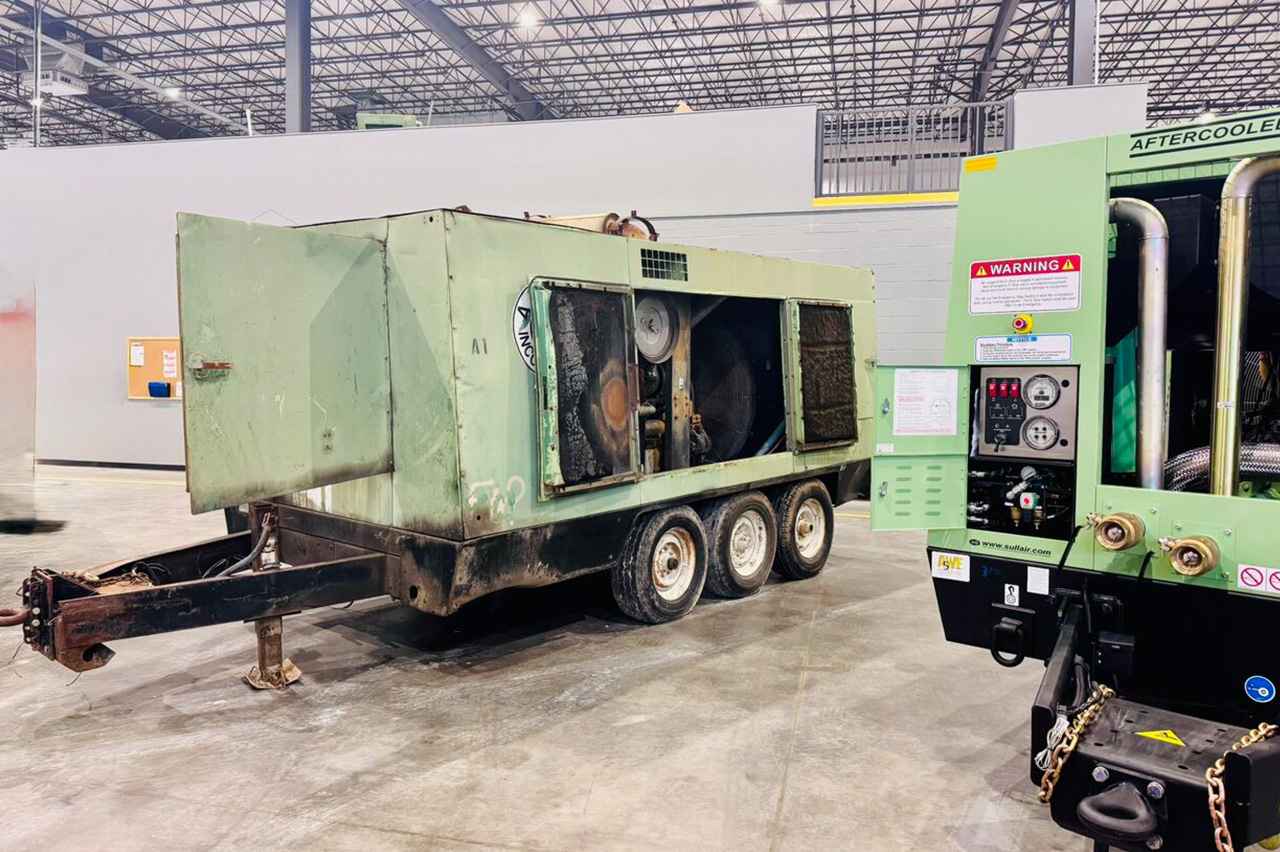
This is an example of a “core”: a used portable air compressor that, at its conventional end-of-life, would typically be recycled as scrap metal. At SRC, however, it is disassembled, high-value components are retained and restored, and remanufactured compressors are built for another life through repeat remanufacturing cycles.
For Hitachi Industrial Equipment Systems, which supports customers throughout the product lifecycle—from maintenance and monitoringto recycling and remanufacturing—the partnership representsmore than an efficiencyinitiative. It reflects a broader shift in how industrial value is defined over time.
If a compressor component can successfully reach a fourth lifecycle, the question becomes difficult to ignore: where does a product’s useful life actually end?The answer, increasingly, may depend less on the product itself than on the systems of maintenance, expertise, and partnership surrounding it.
The Common Thread
A prairie restoration project. A recovering woodland ecosystem. Industrial components entering a fourth lifecycle.
These initiatives operatein different environments and address different dimensions of sustainability. Yet what connectsthem is less visible than any individual outcome.
All three rely on long-term relationships built gradually over time. The LaPorte County Soil and Water Conservation District appears repeatedly throughout the restoration work—not merely as a funding administrator, but as a technical partner and, in the case of the Botanic Gardens project, as the originator of its most distinctive vision. The International Friendship Botanic Gardens contributes decades of community trust and cultural continuity. SRC Industrial Corp contributes the operational confidence necessary to repeatedly rebuild and return industrial systems to service.
None of these relationships were built quickly, and none comewith guaranteed outcomes.
As the people closest to this work have observed, one of the hardest challenges in sustaining partnerships over five-year timelines is navigating changes in leadership—moments when institutional knowledge is lost, priorities shift, and trust must be rebuilt from the ground up. It is the strength of the underlying relationship that carries the work through those transitions.
What sustains the work instead is continued engagement: people willing to remain connected to the process even before they can clearly see the results. In April 2026, the Michigan City Sustainability Commission recognized the initiativeswith its “Caught YOU Being Green” Award—less as a conclusion to the work than as a reflection of how deeply these efforts had already become connected to the local community.
In that sense, sustainability moves at the speed of trust.
Hitachi’s long-term environmental vision—including carbon neutrality across its value chain by fiscal 2050—is ambitious by any measure. But the initiatives emergingfrom Michigan City suggest that meaningful sustainability work may ultimately bebuilt less through declarations than through continuity: acre by acre, lifecycle by lifecycle, relationship by relationship.
And perhaps mostimportantly, through the willingness to continue even when the final outcomeis not yet fully visible.
Reference:
* Hitachi Global Air Power Launches Native Plant Restoration Project at Michigan City Headquarters | Sullair
* Hitachi Global Air Power Advances Sustainability with Woodland Restoration Partnership | Sullair
* Hitachi Global Air Power Honored for Sustainability Leadership in Michigan City | Sullair

Hitachi Global Air Power US
Director of Sustainability